The portal
Implant registrations
Patients can elect to have details about their implant stored on the portal, so in the event of a fault with implant parts the registry can easily identify which patients may be affected.

For people with dental implants there was no system recording the implant information, leaving a gap in the industry. The founder of the Dental Implant Registry worked with Codium to develop a system that helps practitioners keep accurate records of the implants and parts used for each patient.

Patients can consent to storing and sharing their file with different practitioners through the portal, so if complications arise while overseas, the treating dentist can access the record in an emergency.
Patients elect to have their implant details stored on the portal.
If a fault is found with implant parts, the registry quickly identifies which patients may be affected.
Consent-based sharing gives other practitioners access to a patient's file when it matters.
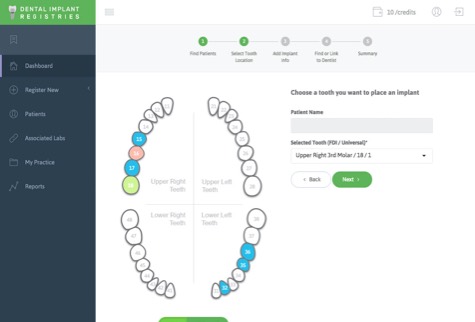
Patients can elect to have details about their implant stored on the portal, so in the event of a fault with implant parts the registry can easily identify which patients may be affected.
We implemented the following technology stack, the same proven foundation behind most of the platforms we build and host.
Built in Vue.js as a single page application, for a fast experience without page reloads and the flexibility to evolve as the system grows.
The backend is built in Laravel and MySQL with an API-first interface, so the web and mobile apps share the same endpoints.
Automated testing and deployment let us test new builds and update production quickly, so we can release as often as required.
Amazon's Elastic Container Service runs each service in its own container within a cluster that scales up and down as needed.
Managed hostingConsent, secure sharing and audit trails are built in from day one. Tell us what needs recording.